Few things chip away at self-confidence as quietly—and deeply—as severe acne. You wake up checking the mirror before turning on the bright bathroom light, angle your face away in group photos, or wonder why you have tried every scrub, mask, and social-media “pore eraser” on the shelf only to end up with angrier, redder skin.
If that sounds familiar, take a deep breath. Whether you are battling painful inflammatory breakouts or staring closely at visible pores on your nose and cheeks, here is the reassuring truth dermatologists want every patient to hear: your skin is not “broken,” and you are not out of options.
2. Pores NEVER close or disappear: No ice cube, charcoal peel-off strip, or grainy scrub can “shut” or erase your pores. Pores are permanent anatomical structures—but the right science-backed routine creates a remarkable visual difference so they look clean, smooth, and noticeably smaller.
1. The 3-Month Transformation: Why Patience Beats Panic in Severe Acne
Severe inflammatory acne happens deep inside a tiny hair follicle (pore) when excess natural oil (sebum) mixes with sticky dead skin cells. That trapped plug creates an ideal environment for normal skin bacteria to multiply, sparking a localized alarm from your immune system—resulting in tender red bumps, pus-filled lesions, or deep painful nodules.
Because the emotional toll is real, it is completely human to hope a new cream will clear your face by the weekend. Yet the #1 mistake patients make is giving up at Week 2. Your skin needs roughly 4 to 6 weeks just to complete one full cell-renewal cycle, and calm deeper inflammation over several cycles.
When you partner with a dermatologist—using targeted medical treatments such as prescription topical retinoids, benzoyl peroxide, targeted topical or oral antibiotics, or systemic oral therapy when clinically indicated—staying steady for 90 days (3 months) lets your treatment stop new clogs before they ever reach the surface. Early, consistent care doesn’t just clear breakouts; it protects your skin from permanent scarring and restores your confidence.
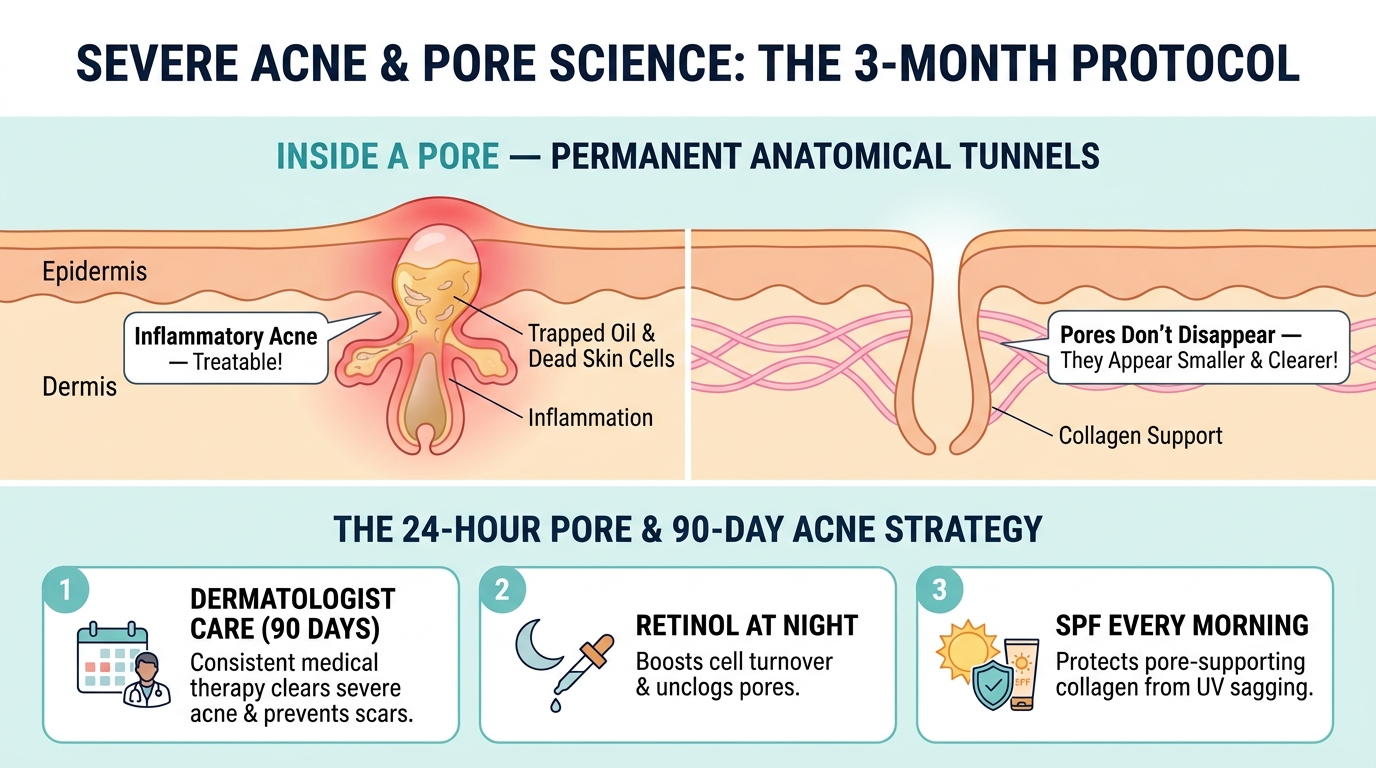
2. Mental Image: Why Pores Are “Permanent Tunnels” (And How the Optical Illusion Works)
So why do pores suddenly look larger—and how do dermatologists make them look smaller? It’s a healthy optical illusion:
- A clogged tunnel stretches wide: When oil and dead skin cells pack inside the tunnel, the rim bulges outward and casts a dark shadow, making the pore look twice its size.
- Sun damage weakens the tunnel walls: UV rays break down the supportive collagen surrounding each pore. Without firm walls, the tunnel opening sags outward.
- Clear the tunnel + protect the walls: Keep the inside clean and defend surrounding collagen from UV damage, and those exact same permanent tunnels immediately look tighter, flatter, and far less noticeable!
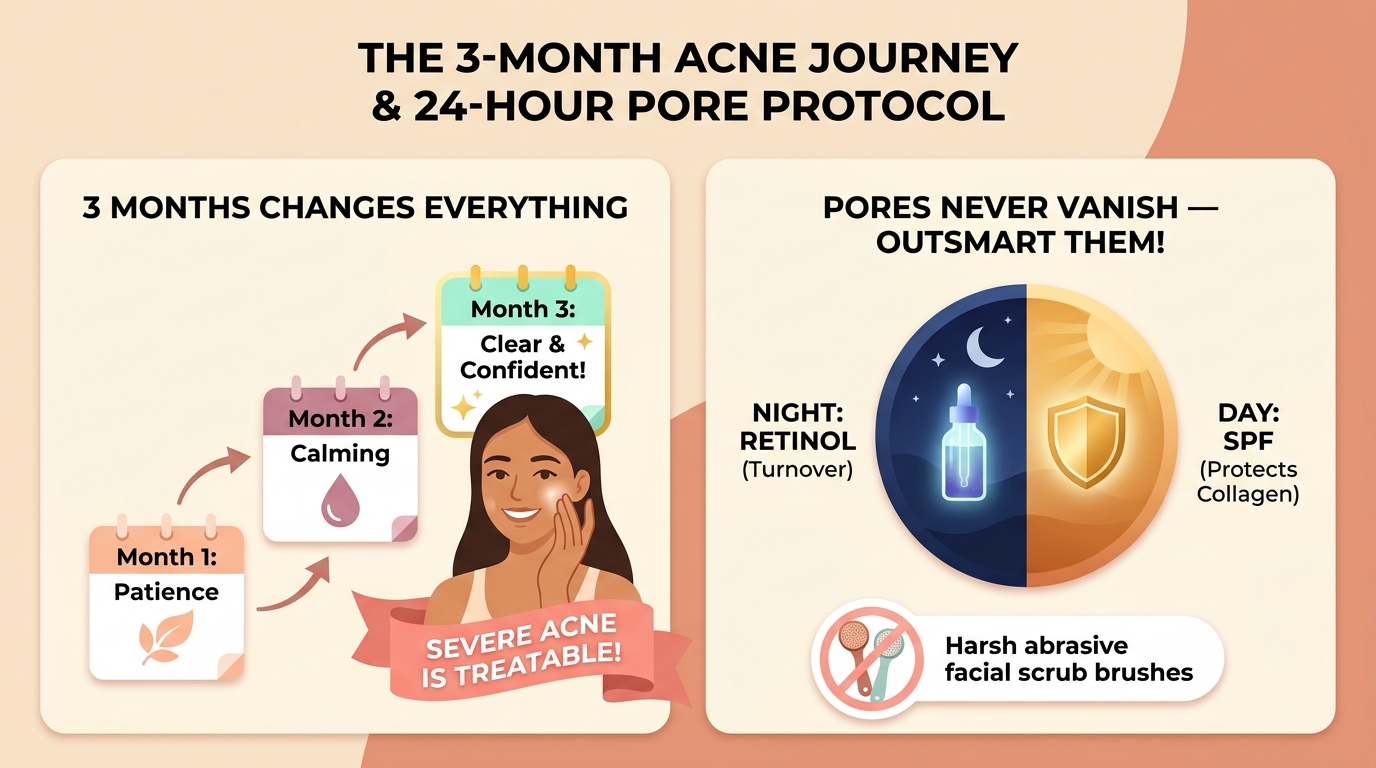
3. Interactive Explorer: 90-Day Acne Healing & 24-Hour Pore Protocol
Use the interactive tool below to watch a clogged, inflamed pore transform across 90 days of consistent care—then switch to the Day vs. Night Pore Protocol tab to see why Retinol at night + SPF by day beats harsh scrubs and pore strips every time.
4. The 24-Hour Pore Protocol: Simple Habits That Actually Work
You do not need a 10-step bathroom shelf or expensive gadgets to refine your pores and support clear skin. Dermatologists focus on three reliable pillars working quietly around the clock:
Gentle Cleanse & Hydrating Serum
Use a mild, fragrance-free cleanser twice daily to lift excess oil without stripping your skin barrier. Follow with a lightweight hydrating or pore-refining serum (such as niacinamide) to keep skin calm and balanced.
Nighttime Retinol
A pea-sized layer of retinol speeds up sluggish cell turnover so sticky dead cells don’t clog your pore tunnels, while gradually boosting smooth texture and collagen support over weeks.
Broad-Spectrum SPF 30+
UV exposure literally stretches pores by breaking down surrounding collagen—and makes retinol-treated skin sun-sensitive. Daily lightweight, non-comedogenic sunscreen protects your progress every morning.
Important Pregnancy Safety Note: Do not use retinoids—including over-the-counter retinol, adapalene, prescription tretinoin, or oral isotretinoin—during pregnancy or while trying to conceive. Always ask your doctor for pregnancy-safe alternatives, and never stop a prescribed dermatology treatment without checking with your physician.
5. Science-Backed Reference Guides
A. Why Pores Look Large vs. What Actually Minimizes Them
| Why Pores Look Bigger | What’s Happening Under the Surface | What Actually Helps (Science-Backed) |
|---|---|---|
| Trapped Oil & Dead Cells | Sebum and dead skin cells pack the pore tunnel, stretching the opening and oxidizing dark at the top. | Gentle daily cleansing + nighttime retinol (or dermatologist-guided exfoliants) to keep tunnels clear. |
| Sun Damage (UV Aging) | UV rays weaken the elastic collagen walls around pores, causing openings to sag wider over time. | Daily broad-spectrum SPF 30+ to protect collagen + nighttime retinol to support smoother texture. |
| Dehydration & Over-Stripping | Harsh soaps strip moisture, causing tight, rough surface skin that makes pore shadows look harsher. | Mild pH-balanced wash + lightweight hydrating/refining serum and oil-free moisturizer. |
| Genetics & Natural Oil Flow | Oilier zones (nose, forehead, chin) naturally have slightly wider permanent tunnels. | Embrace healthy skin texture—aim for clean, calm, protected pores, not airbrushed perfection! |
B. Your 90-Day Acne Expectations Guide
| Timeline Phase | What You May Notice | Your Game Plan |
|---|---|---|
| Weeks 1–2 Getting Started |
Skin is just meeting your new routine; little visible change yet, and occasional mild dryness. | Keep it simple and gentle. Moisturize daily and resist adding harsh scrubs or extra spot treatments. |
| Weeks 3–4 The Patience Phase |
Mild flaking or a few buried clogs surfacing as cell turnover speeds up. #1 time people quit! | Stay consistent! Use moisturizer before/after retinol if needed, wear SPF daily, and message your doctor if irritation stings. |
| Weeks 6–8 Turning the Corner |
Fewer new painful breakouts, calmer redness, and smoother texture across previously congested zones. | Keep your exact protocol running—this is when preventive benefits lock in beneath the surface. |
| Month 3 (Day 90) The Transformation |
Dramatic drop in inflammatory lesions, noticeably calmer skin tone, and renewed everyday confidence! | Check in with your dermatologist to celebrate progress and shift into a simple long-term maintenance routine. |
6. Tap to Bust the 3 Biggest Acne & Pore Myths
7. Gentle Routine vs. Damaging Myths — And When to See a Dermatologist
- Deep, painful lumps, nodules, or cysts beneath the skin’s surface.
- Early scarring, indented marks, or persistent dark/red spots left behind as pimples heal.
- Emotional distress: Acne is affecting your mood, sleep, confidence, or making you avoid friends and photos.
- No improvement after 8–12 weeks of a gentle, consistent over-the-counter routine.
- Sudden adult-onset acne paired with irregular periods or unusual facial hair growth (which can point to an underlying hormonal cause).
| Gentle, Science-Backed Habit (Do This) | Skin-Damaging Myth (Skip This) | Why Your Dermatologist Cares |
|---|---|---|
| Mild twice-daily cleansing with lukewarm water | Washing 5 times a day, hot steam, or grainy walnut/salt scrubs | Preserves your skin barrier so medical treatments work without burning. |
| Nighttime retinol + daily SPF 30+ (non-comedogenic) | Peel-off pore strips, toothpaste, lemon juice, or baking soda | Keeps pore tunnels clear and guards collagen instead of causing chemical burns. |
| Hands off + hydrocolloid patch for surface spots | Squeezing, popping, or picking deep breakouts in a magnifying mirror | Popping pushes inflammation deeper, turning a 5-day pimple into a lifelong scar. |
| Early dermatologist visit for nodular or scarring acne | Waiting years hoping severe painful breakouts vanish on their own | Modern prescription care clears severe acne safely and prevents permanent scars. |
8. Frequently Asked Questions
Why did my skin feel a little dry or break out slightly more during Weeks 2–4 of starting retinol?
When you first introduce a retinoid, faster skin cell turnover brings tiny pre-existing clogs to the surface faster than usual, and mild dryness can happen as your barrier adjusts. Using only a pea-sized amount 2–3 nights a week and sandwiching it with a gentle moisturizer usually keeps skin comfortable. If you develop painful stinging, swelling, or rash, pause and check in with your dermatologist.
Do I really need sunscreen if I have oily, acne-prone skin?
Yes—sunscreen is one of the smartest anti-acne and pore-refining habits you can build! UV rays break down the collagen holding your pore walls firm (making pores look wider), darken post-acne marks for months, and easily irritate skin using retinol or acne prescriptions. Look for lightweight, oil-free, non-comedogenic broad-spectrum SPF 30 or higher.
Can popping a pimple make it heal faster?
Unfortunately, squeezing does the exact opposite. Pressure ruptures the fragile pore wall beneath the surface, pushing trapped oil, debris, and bacteria deeper into the dermis. That triggers heavier swelling, slows healing, and dramatically raises your risk of permanent indented scarring and lingering dark spots.
Is it safe to use retinol or prescription acne treatments during pregnancy?
No—both over-the-counter retinol and prescription retinoids (topical or oral) must be avoided during pregnancy and while trying to conceive. If you are pregnant, breastfeeding, or planning a pregnancy, let your dermatologist know right away so they can design a gentle, pregnancy-safe clear-skin plan for you.