
This document details Small Intestinal Bacterial Overgrowth (SIBO), its symptoms, causes, diagnostic methods, and a phased herbal treatment protocol.
I. Understanding SIBO: Symptoms and Causes
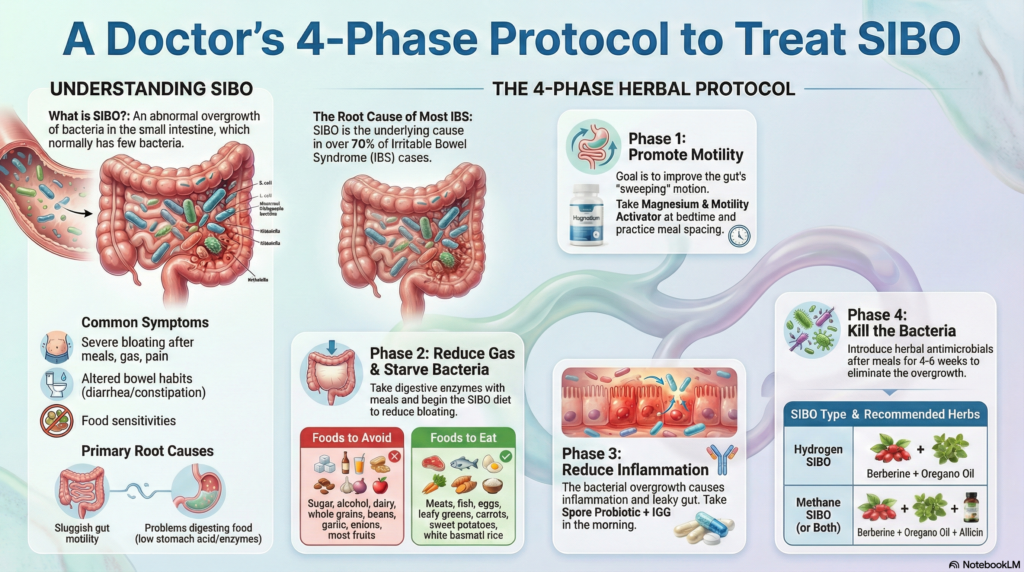
Definition: SIBO is an excess of bacteria in the small intestine, characterized by the presence of too many of the wrong types of bacteria.
Symptoms:
- Digestive: Bloating (often post-meal), abdominal pain (dull ache to sharp cramps), constipation, diarrhea, food intolerances.
- Non-Digestive: Anxiety, chronic fatigue.
Prevalence: SIBO is linked to over 70% of Irritable Bowel Syndrome (IBS) cases.
Causes:
- Sluggish Migrating Motor Complex (MMC): The small intestine’s natural cleansing mechanism can be impaired by factors like food poisoning, chronic stress, or autoimmune conditions, allowing bacteria to linger.
- Impaired Digestion: Insufficient stomach acid or digestive enzymes leads to undigested food in the small intestine, feeding bacteria.
- Other Risk Factors: Chronic constipation, proton-pump inhibitors (PPIs), autoimmune diseases, and structural abnormalities in the digestive tract.
II. Historical and Diagnostic Evolution of SIBO
Ancient Roots: The concept of digestive distress due to bacterial imbalance is likely ancient, with traditional medicine systems (Ayurveda, Traditional Chinese Medicine, ancient Egyptian medicine) using botanicals for gut ailments.
Diagnostic Methods:
- Small Bowel Aspirate and Culture: Historically the “gold standard,” this invasive, costly, and often inaccurate method involved direct sampling and culturing of small intestinal fluid.
- Breath Test (1970s onwards): A non-invasive method that measures hydrogen (H₂) and methane (CH₄) gases produced by bacteria in the small intestine after ingesting a sugar solution (typically lactulose).
III. Modern SIBO Management: Diagnosis and Treatment Approaches
Current Diagnosis:
- Lactulose Breath Test: The primary diagnostic tool. Involves consuming lactulose and collecting breath samples to measure H₂ and CH₄ levels.
- SIBO Types:
- Hydrogen-dominant SIBO: Often associated with diarrhea (IBS-D).
- Methane-dominant SIBO (Intestinal Methanogen Overgrowth – IMO): Often associated with constipation (IBS-C).
- Personalized Treatment: Breath test results guide the selection of antimicrobial agents and dietary strategies.
Herbal Antimicrobials vs. Prescription Antibiotics:
- Johns Hopkins Study: Demonstrated that herbal antimicrobials are as effective as prescription antibiotics for SIBO eradication with potentially fewer side effects.
- Benefits of Herbs: Broad-spectrum action (targeting SIBO, SIFO, dysbiosis), anti-inflammatory properties, and addressing underlying root causes.
Three Pillars of SIBO Treatment:
🌿
1. Kill
Eradicate excess bacteria.
🍎
2. Starve
Limit bacterial food sources.
🚶♀️
3. Promote
Restore natural gut motility.
Phased Approach: A gradual protocol is crucial for minimizing discomfort and maximizing success, often involving a 4-phase approach.
IV. SIBO Debates and Diagnostic Challenges
Breath Test Limitations:
Concerns exist regarding accuracy, with potential for false positives (rapid transit, certain foods) and false negatives (missed non-hydrogen producers, intermittent SIBO).
Overdiagnosis Concerns:
Some argue SIBO is overdiagnosed, leading to unnecessary testing and treatment, and potential for excessive antibiotic use contributing to resistance.
SIBO as a Symptom:
The evolving view is that SIBO may be a “lab finding” or a consequence of underlying issues rather than a standalone disease, often underlying conditions like IBS.
V. The 4-Phase Herbal Protocol for SIBO Relief
This protocol is phased to minimize discomfort and maximize effectiveness.
1️⃣ Phase 1: Motility Support (Week 1)
Goal: Support the Migrating Motor Complex (MMC) to clear bacteria and debris.
Methods: Magnesium supplementation, prokinetics, and meal spacing.
2️⃣ Phase 2: Symptom Management and Diet (Week 2)
Goal: Address gas and bloating, and reduce bacterial food sources.
Methods: Digestive enzymes, acid support (if needed), and a temporary “Starve the Bugs” diet (Low FODMAP/Lectin).
3️⃣ Phase 3: Gut Healing Preparation (Week 3)
Goal: Treat inflammation and “leaky gut” to prepare for eradication.
Methods: Spore probiotics and immunoglobulins.
4️⃣ Phase 4: Eradication Expedition (Weeks 4-6+)
Goal: Targeted herbal antimicrobial attack based on SIBO type.
Herbs: Berberine, Oregano Oil, and Allicin, chosen based on breath test results.
Continuation: All previous phases should be continued during this phase.
Managing “Die-Off” (Herxheimer Reactions):
Temporary symptom flares can be managed with enzymes, spore probiotics, and B vitamins.
Warnings:
Contraindications include pregnancy and nursing. Awareness of potential medication interactions is essential.
VI. Long-Term Wellness and Future of SIBO Management
Confirmation of Clearance:
Re-testing (e.g., a “flat line” breath test) is crucial to confirm bacterial clearance.
Smart Food Reintroduction:
A systematic approach to reintroducing foods to identify individual triggers and personalize long-term dietary plans.
Relapse Prevention:
- Continued motility support (magnesium, prokinetics, meal spacing).
- Strategic probiotic use after SIBO clearance.
- Ability to safely repeat the protocol if needed.
Future Advancements:
- Next-Gen Diagnostics: Ingestible smart capsules for direct gut sampling, advanced 3-gas breath tests (H₂, CH₄, H₂S) for more precise diagnosis.
- Personalized Treatments: Highly individualized approaches based on deeper microbiome understanding.
- New Therapies: Ongoing clinical trials for specific probiotic strains and integrated therapies combining herbs, diet, and pharmaceuticals.
VII. Empowering Your Gut Health Journey
SIBO management can be complex, but a structured, comprehensive approach, such as the herbal protocol outlined, offers a path to lasting relief. The emphasis is on empowering individuals with knowledge and a clear plan.
References :
https://pmc.ncbi.nlm.nih.gov/articles/PMC9933597/
https://pmc.ncbi.nlm.nih.gov/articles/PMC2890937/