Dr. Belh — Clinical Analysis
Strengthening Hair Fiber Against Breakage: Structural Correction Protocols
Hair breakage is a mechanical or physiological phenomenon affecting the shaft’s integrity, distinct from follicular hair loss.
It signals a failure of the keratin structure caused by dehydration, thermal stress, or internal imbalances.
Clinical Definition of Rupture
Breakage occurs when the hair cortex loses its elastic capacity and fractures under stress, leading to a visible reduction in length and density. Unlike alopecia, which concerns the bulb, breakage is a physical alteration of the shaft itself. It manifests as split ends, a rough texture, and irregular hair segments.
Hierarchical Analysis of Risk Factors
Hair integrity depends on a precise moisture balance. A lack of water weakens internal hydrogen bonds, making the fiber brittle like dry wood.
Dr. Belh’s Structural Approach
Principle 1: Hydration as a Fundamental Barrier
Hair requires constant water intake to maintain flexibility.
Action: Integrate water intake and regular hydrating masks as the first line of defense against fiber rigidity.
Principle 2: Internal Nutrition as Cement
A balanced diet provides amino acids and micronutrients essential for keratin synthesis.
Action: Monitor nutritional intake to consolidate the internal hair structure from formation.
Principle 3: Non-Abrasive Mechanical Management
Wet hair is in its most vulnerable state.
Action: Replace friction with absorption by wrapping hair in a towel without rubbing.
Key Retention Points
- ■
Hydration: Imperative condition for elasticity and fracture prevention. - ■
Protection: Necessary application of protective products before any thermal exposure. - ■
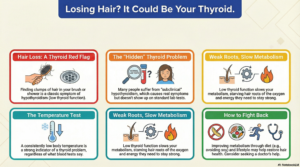
Medical Diagnosis: Hyperthyroidism must be considered in cases of excessive and persistent breakage. - ■
Drying Technique: Static absorption by towel is preferred over dynamic friction. - ■
Consultation: Professional expertise allows for the adjustment of repair protocols.
Summary of Clinical Correctives
| Causal Factor | Damage Mechanism | Clinical Solution |
|---|---|---|
| Dehydration | Loss of elasticity, cortex rigidity | Hydrating masks, water consumption |
| Mechanical Friction | Cuticle erosion (rough drying) | Absorption drying (towel wrapping) |
| Metabolic Imbalance | Fine, dry hair, diffuse shedding (Thyroid) | Medical check-up, balanced nutritional diet |
Photorealistic Image Prompt
Frequently Asked Questions (FAQ)
What is the difference between breakage and hair loss?
Breakage is a fracture of the hair shaft due to structural fragility, whereas hair loss involves the detachment of the entire hair from the root (follicle).
How should I dry my hair to avoid breakage?
Avoid vigorous rubbing. Wrap hair in an absorbent or microfiber towel and allow the water to be absorbed via gentle pressure.
Does diet play a direct role in hair strength?
Yes. A deficiency in essential nutrients affects keratin production, making the hair structurally weaker and prone to immediate fracture.
Why is my hair breaking despite treatments?
If external treatments fail, one must consider an internal cause such as thyroid dysfunction or chronic systemic dehydration.
When should a hair mask be used?
Usage is recommended weekly to maintain a deep level of hydration, or more frequently as an intensive treatment for severely damaged hair.