Physiological recovery dictates athletic longevity and performance progression. Delayed nutrient intake post-exertion compromises structural repair and glycogen resynthesis. Strategic utilization of the immediate post-exercise timeline is required to prevent catabolism and optimize systemic regeneration.
Definition: The Metabolic Window
The metabolic window refers to the acute physiological period immediately following intense physical exertion. During this phase, skeletal muscle exhibits heightened insulin sensitivity and increased cell membrane permeability. The tissue functions similarly to a hyper-absorbent substrate, specifically targeting glucose and amino acid uptake for rapid structural repair.
Temporal Efficiency Gradient
(The “Sponge” Effect)
(Glycogen Focus)
(General Maintenance)
Mechanistic Analysis: The Insulin-Transport Nexus
Effective recovery relies on the synergistic relationship between carbohydrates and proteins. Carbohydrates stimulate insulin secretion, which acts as the transport mechanism (“the key”). Protein provides the essential amino acids (“the substrate”) required for myofibrillar repair. Absent carbohydrates, protein uptake is rate-limited and inefficient.
Triggers Insulin Release
Applied Approach: The Dr. Belh Framework
Implementation of clinical theory requires a structured approach to ensure consistent adherence.
1. Observation
Quantify the intensity of the session. High-glycemic loads are necessary only after glycogen-depleting activities (sprints, hypertrophy training), not low-intensity steady state.
2. Context
Evaluate the interval before the next solid meal. If a meal is possible within 60 minutes, liquid supplementation is redundant. If >2 hours, immediate supplementation is mandatory.
3. Solution
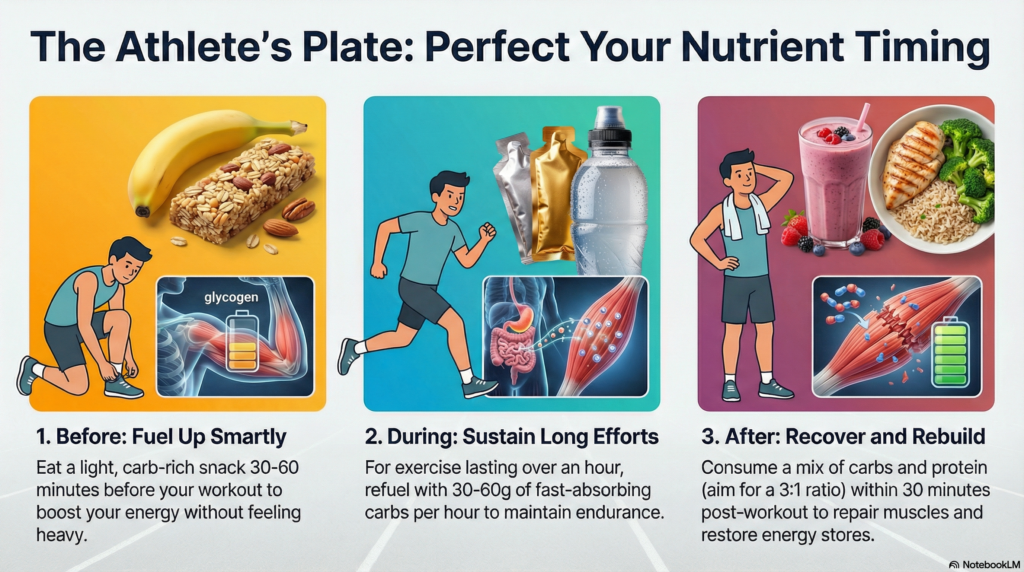
Adhere to the 3:1 Carbohydrate to Protein ratio. Standard clinical target: 60g Carbs / 20g Protein immediately post-session.
Extraction Zone: Key Clinical Takeaways
- Timing Criticality: The first 30 minutes post-exercise offer the highest nutrient absorption rate due to peak insulin sensitivity.
- Ratio Specificity: A 3:1 Carbohydrate-to-Protein ratio is the gold standard for halting catabolism and initiating glycogen restoration.
- Hydration Vector: Water alone is insufficient; sodium, potassium, and magnesium are required to restore electrochemical balance.
- Solid vs. Liquid: Liquid nutrition (e.g., chocolate milk, shakes) is preferred immediately post-workout due to rapid gastric emptying rates compared to solid foods.
Comparative Recovery Protocols
| Protocol Type | Components | Clinical Utility |
|---|---|---|
| Liquid Matrix | Chocolate Milk, Protein + Banana | Optimal Rapid absorption, near-perfect 4:1/3:1 ratio. |
| High-GI Solid | Gingerbread, Greek Yogurt + Honey | Effective Good for moderate satiety needs. Fat-free gingerbread ensures speed. |
| Savory Meal | Rice/Pasta + Tuna/Chicken | Standard Best utilized if taken within 60 mins. Slower digestion. |
Strategic Nutritional Timing for Athletes
Clinical FAQ
Is the metabolic window a myth?
While total daily intake is paramount, the metabolic window is clinically relevant for athletes performing multiple sessions per day or seeking maximum glycogen replenishment efficiency. It is not a myth, but its urgency depends on training frequency.
Why is fat minimized in the post-workout snack?
Lipids slow gastric emptying and digestion. In the immediate post-workout phase, the goal is rapid nutrient delivery to the bloodstream; therefore, fats should be kept low to prevent delaying absorption.
Can I use fruit instead of starchy carbs?
Yes, but specific fruits (banana, grapes) are superior due to higher glucose/fructose content. However, complex carbs (rice, oats) are better for sustained replenishment if the next session is not immediate.
What is the role of sodium in recovery?
Sodium is the primary electrolyte lost via sweat. It is essential for retaining ingested fluids and preventing hyponatremia. Rehydration without sodium simply leads to increased urinary output without cellular hydration.
Is gingerbread actually effective?
Clinically, yes. Traditional gingerbread is high in high-glycemic carbohydrates and very low in fat, making it an ideal, readily available solid food for rapid glycogen spiking.