Introduction. The integration of traditional herbal medicine into modern clinical practice requires rigorous validation of bioactive constituents and safety profiles. Eurycoma longifolia presents a complex phytochemical matrix with demonstrated efficacy in androgenic modulation, ergogenic performance, and plasmodial inhibition. This review analyzes the chemical pharmacology and toxicological evidence to establish a baseline for therapeutic application.
1. Definition and Phytochemical Profile
Eurycoma longifolia Jack, commonly known as Tongkat Ali or Malaysian Ginseng, is a flowering plant of the Simaroubaceae family native to Southeast Asia. While all parts of the plant are utilized in traditional medicine, the root (radix) contains the highest concentration of bioactive compounds. The primary pharmacological agents are quassinoids, specifically eurycomanone, along with canthin-6-one alkaloids, beta-carboline alkaloids, and squalene derivatives.
2. Mechanistic Analysis
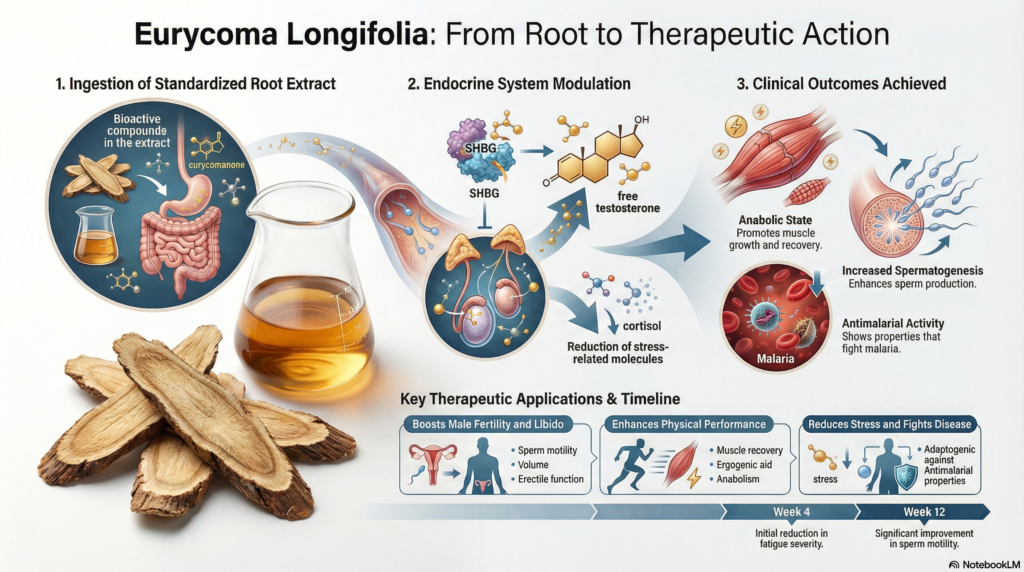
The physiological impact of E. longifolia is not attributable to a single pathway but rather a cascading interaction of quassinoids with the endocrine system.
INPUT: Bioactive Ingestion Administration of Standardized Root Extract (Eurycomanone >1%)
↓
ACTION: Endocrine Modulation Release of Free Testosterone via SHBG inhibition + Cortisol reduction
Clinical presentation of idiopathic infertility or late-onset hypogonadism marked by low libido and fatigue, often without primary testicular failure.
2. Context
Modern environmental stressors increase cortisol, inversely suppressing testosterone. Traditional use supports E. longifolia as an adaptogen to reverse this ratio.
3. Solution
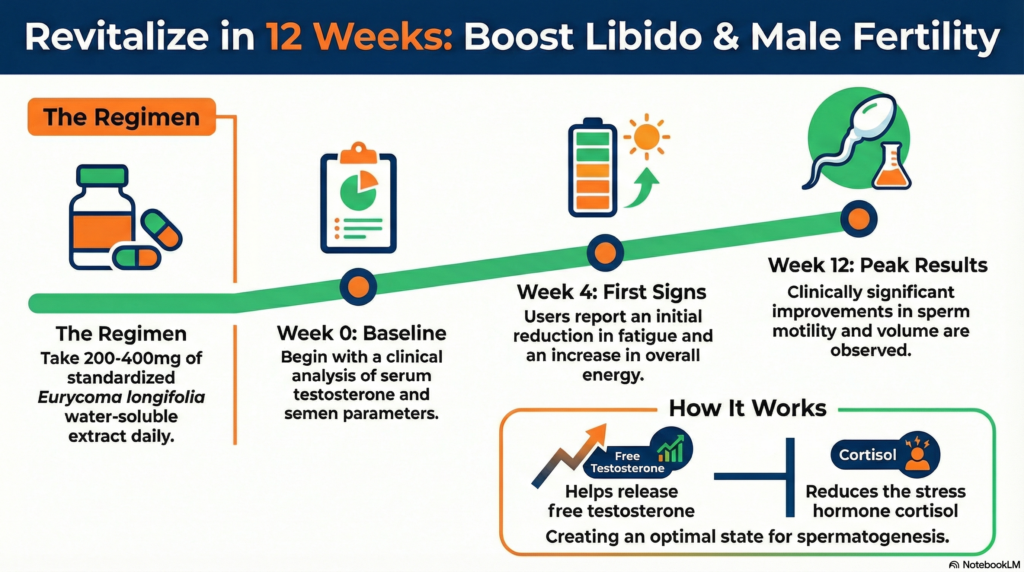
Integration of water-soluble extract (200-400mg/day) to improve sperm motility and volume while monitoring liver enzymes for safety.
4. Therapeutic Timeline
Based on reviewed studies, the ergogenic and androgenic effects are dose-and-time dependent.
0
Baseline
Serum Testosterone & semen analysis.
4
Week 4
Initial reduction in Fatigue Severity Scale.
12
Week 12
Significant improvement in sperm motility & volume.
5. Clinical Extraction Points
Ergogenic Aid: Significant evidence supports use for physical performance and muscle recovery (anabolic properties).
Antimalarial: The quassinoids exhibit strong inhibitory activity against Plasmodium falciparum strains.
Cytotoxicity: Demonstrated antiproliferative effects against lung and breast cancer cell lines in vitro.
Aphrodisiac: Validated improvement in libido and erectile function via the dopaminergic pathway.
Safety: LD50 values indicate safety at therapeutic doses; toxicity only observed at extreme dosages (e.g., >2000mg/kg in mice).
6. Synthesis Data
Condition / Target
Active Constituent
Mechanism
Observed Efficacy
Male Infertility
Eurycomanone
Hypothalamic-pituitary-gonadal axis stimulation
High
Malaria
Quassinoids
Inhibition of protein synthesis in parasites
High (In Vitro)
Diabetes
Bioactive Polypeptides
Increase in insulin sensitivity
Moderate
Anxiety/Stress
Unspecified extract
Cortisol reduction (Adaptogenic)
High
7. Revitalize Your Libido
Eurycoma Longifolia Therapeutic ActionRevitalize Your Libido: How to Increase Sperm Motility and Volume in 12 Weeks
8. Clinical FAQ
Q: What is the recommended therapeutic dosage? A: Clinical studies generally utilize 200mg to 400mg per day of standardized water-soluble extract.
Q: Is there hepatotoxicity associated with long-term use? A: Acute toxicity studies (LD50) show high safety margins. Therapeutic doses are not typically hepatotoxic, but caution is advised in patients with pre-existing liver conditions.
Q: Can it be used by women? A: While primarily studied for male androgenic health, its adaptogenic and ergogenic properties apply to women; however, dosage should be adjusted due to testosterone modulation.
Q: What is the primary chemical marker for quality? A: Eurycomanone content. A high-quality extract should specify the percentage of this quassinoid.
Q: How does it compare to TRT (Testosterone Replacement Therapy)? A: It is an endogenous booster, not an exogenous hormone. It encourages the body’s own production, making it milder but with fewer side effects than TRT.