The Complete Guide to Erectile Dysfunction Treatment: Medical Efficacy, Costs, and Critical Legal Considerations
Erectile dysfunction (ED) is a widespread condition impacting men’s health, relationships, and overall quality of life. As we enter 2026, advancements in medical treatments offer more options than ever, from traditional oral medications to innovative therapies like shockwave treatment and gene therapy. However, choosing the right approach involves weighing efficacy, financial implications, potential side effects, and emerging legal risks. This in-depth guide explores ED from multiple perspectives, including its causes, psychological effects, treatment comparisons, cost breakdowns, and regulatory challenges.
We’ll examine evidence-based outcomes, real-world considerations, and strategies for making informed decisions, ensuring you have a comprehensive understanding to navigate this complex landscape.
Whether you’re dealing with age-related ED, diabetes-induced vascular issues, or stress-related performance anxiety, understanding the full spectrum of treatments can empower better health outcomes. We’ll cover edge cases, such as treatment-resistant ED, and related factors like partner involvement and long-term lifestyle changes. By the end, you’ll grasp not only how to address ED physically but also how to mitigate its emotional and legal ramifications. To enhance clarity, this guide incorporates visual aids like diagrams, infographics, and tables, along with representations of animations to illustrate dynamic processes. References from PubMed have been integrated to substantiate key claims, drawing from systematic reviews, meta-analyses, and clinical trials for a robust evidence base.
Understanding Erectile Dysfunction: Causes, Prevalence, and Broader Impacts
Erectile dysfunction refers to the persistent difficulty in achieving or sustaining an erection adequate for sexual activity. It’s not just a physical issue; it intertwines with vascular, neurological, hormonal, and psychological factors. Globally, ED affects over 150 million men, with projections reaching 322 million by 2025—though updated 2026 data suggests even higher numbers due to aging populations and rising chronic diseases like obesity and hypertension. In the United States, prevalence estimates vary, with recent surveys indicating around 24.2% overall, affecting approximately 30 million men, and increasing significantly with age—roughly 40% at age 40 and 70% at age 70. However, younger men aren’t immune—lifestyle factors like smoking, poor diet, and sedentary habits contribute significantly.
Diabetes, for instance, doubles the risk due to nerve and blood vessel damage, while cardiovascular diseases account for up to 80% of cases in some studies. Psychogenic ED, stemming from anxiety or depression, affects 10-20% of cases, often creating a vicious cycle where fear of failure worsens symptoms.
To visualize the anatomical basis, consider this diagram showing the cross-section of the penis in flaccid and erect states, highlighting key structures like the corpora cavernosa and how blood flow impairments lead to ED.

Beyond the bedroom, ED’s ripple effects are profound. Men report heightened anxiety, with 30-50% developing depressive symptoms. Relationships suffer: partners may feel rejected, leading to communication breakdowns and intimacy avoidance. Socially, it can erode self-esteem, impacting work performance and social interactions. Economically, untreated ED correlates with higher healthcare costs from related comorbidities. Culturally, stigma persists, delaying treatment—yet early intervention can reverse many cases, highlighting the need for holistic approaches that address both body and mind.
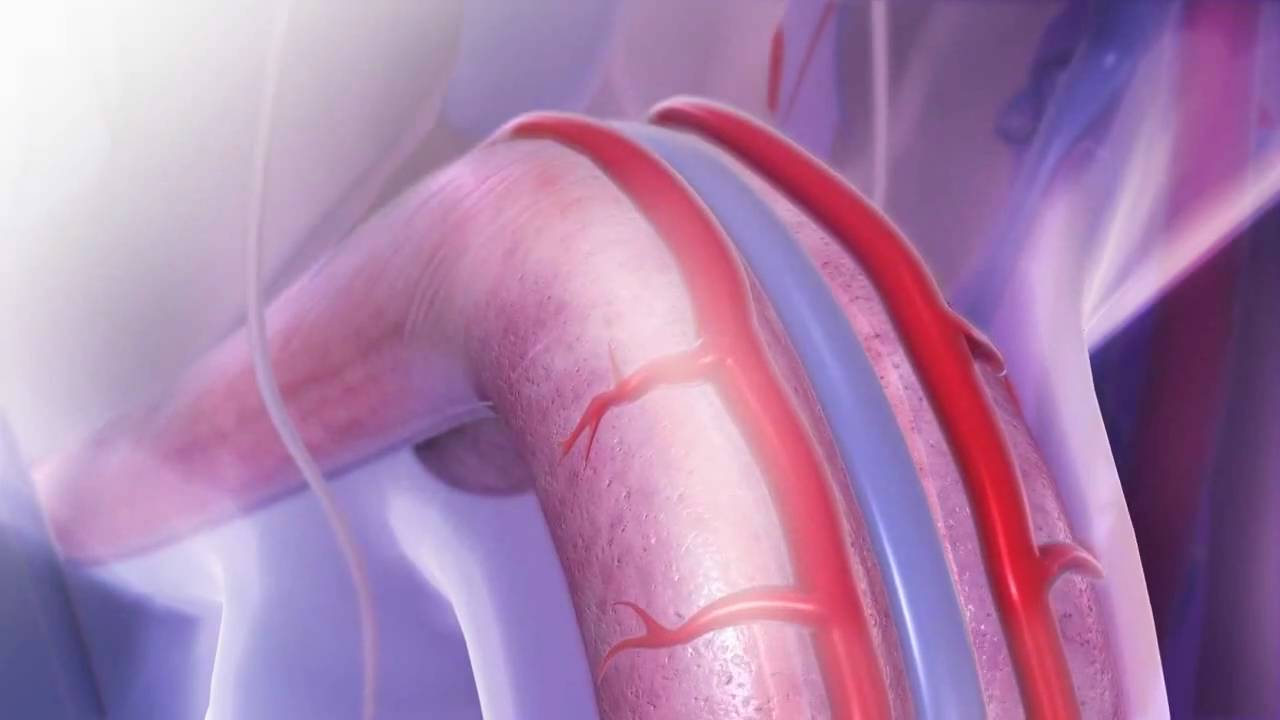
Consider a hypothetical scenario: A 55-year-old executive with type 2 diabetes experiences ED, triggering anxiety that exacerbates his condition. Without treatment, this could lead to marital strain and professional burnout. However, integrating medical therapy with counseling often restores function and emotional balance, demonstrating ED’s interconnected nature. For a dynamic view, here’s a representation of an animation depicting the tunica albuginea and blood flow during erection, which can help conceptualize the process (note: this static image captures key frames from educational animations; imagine the blood flow increasing dynamically).

Oral Medications: Cornerstone of ED Treatment in 2026
Phosphodiesterase-5 (PDE5) inhibitors remain the first-line therapy for ED, blocking enzymes to enhance blood flow during arousal. Since sildenafil’s debut in 1998, options have expanded, with generics making them accessible.
Efficacy and Mechanisms of PDE5 Inhibitors
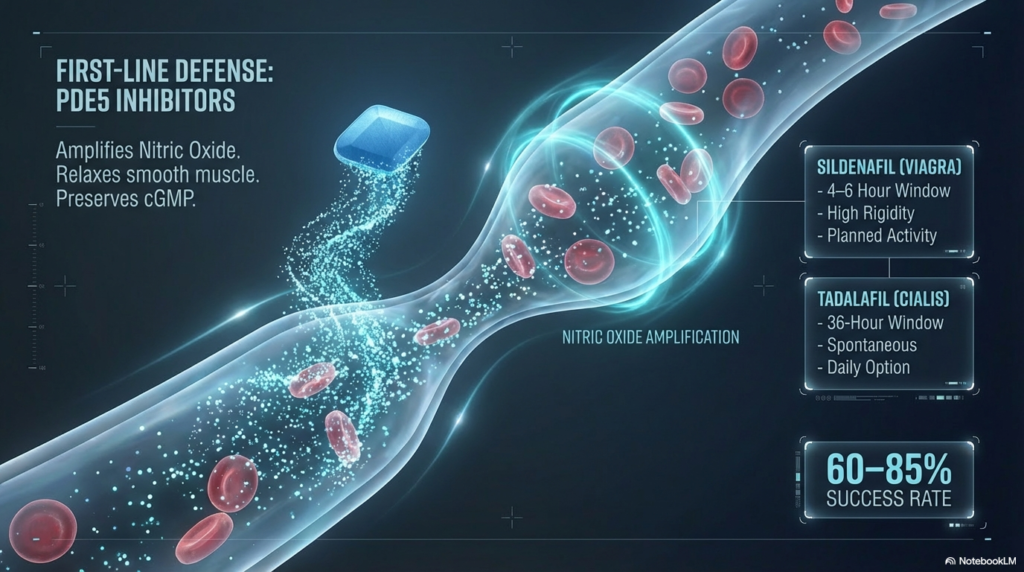
Sildenafil (Viagra) and tadalafil (Cialis) dominate, with efficacy rates of 60-85% across studies. They amplify nitric oxide’s effects, relaxing penile smooth muscles for better erections. Success varies: psychogenic ED responds best (up to 90%), while severe vascular cases see 50-60%. New formulations, like the FDA-approved sildenafil oral film (Vybrique) launching in March 2026, offer discreet, water-free dosing with similar efficacy.
Comparative trials show sildenafil effective for 4-6 hours, ideal for planned activity, while tadalafil’s 36-hour window supports spontaneity. Daily low-dose tadalafil also treats benign prostatic hyperplasia, adding dual benefits. Patient preferences lean toward tadalafil for flexibility, but individual trials are key—some report better rigidity with sildenafil.
This infographic illustrates how PDE5 inhibitors improve erectile function by preserving cGMP and enhancing blood flow, contrasting scenarios with and without the medication.

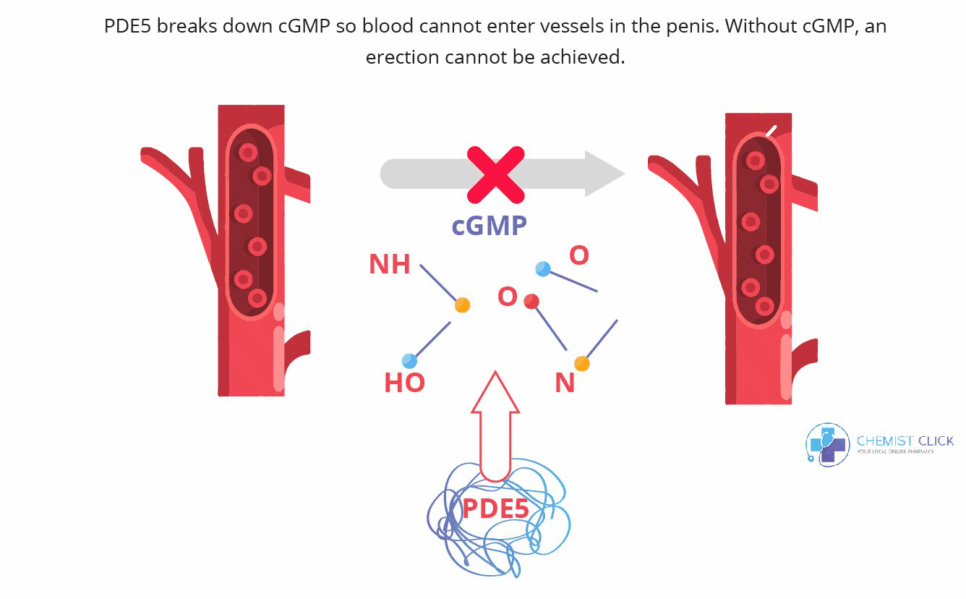
Nuances include non-responders (20-30%), often due to improper use (e.g., not taking on an empty stomach). Combining with lifestyle changes boosts outcomes: a study found 75% efficacy when paired with exercise.
Side Effects, Contraindications, and Safety Profiles
Common side effects—headaches (15%), flushing (10%), nasal congestion—typically resolve with use. Sildenafil’s visual disturbances (blue tint) affect 3%, linked to retinal enzyme inhibition. Severe risks include priapism (rare, <0.1%) and cardiovascular events, though PDE5 inhibitors are safe for most heart patients post-evaluation.
Absolute contraindications: nitrates for angina, as combinations cause hypotension. Caution for recent strokes, severe liver/kidney issues, or retinal disorders. In 2026, updated guidelines emphasize pre-treatment cardiac screening, reducing adverse events to under 1% in compliant patients.
For a clear overview, this infographic categorizes side effects by commonality and severity, advising on when to seek care.
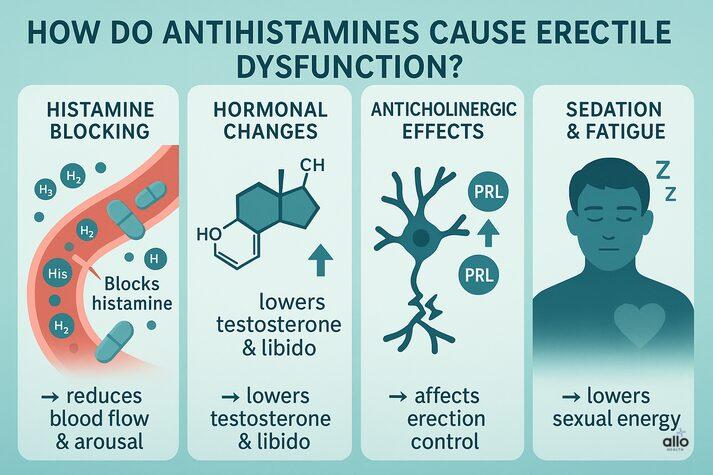
Edge cases: Men with Peyronie’s disease may need adjusted dosing to avoid curvature worsening. Overall, safety profiles are strong, with millions using them annually without issues.
Costs and Accessibility of Oral ED Treatments
Generics have slashed prices: sildenafil costs $2-5 per pill, tadalafil $1-3 daily. Monthly supplies range $20-100, depending on frequency. Brand names like Viagra hit $90/pill, but discounts via GoodRx bring generics to $8-10 for six doses. Insurance varies—many cover generics partially, but classify as “lifestyle” drugs, leading to out-of-pocket expenses.
Long-term: A 10-year supply might cost $2,400-12,000, factoring inflation. Online pharmacies offer savings, but beware counterfeits—stick to verified sources.
Injectable Therapies: High-Efficacy Alternatives for Resistant Cases
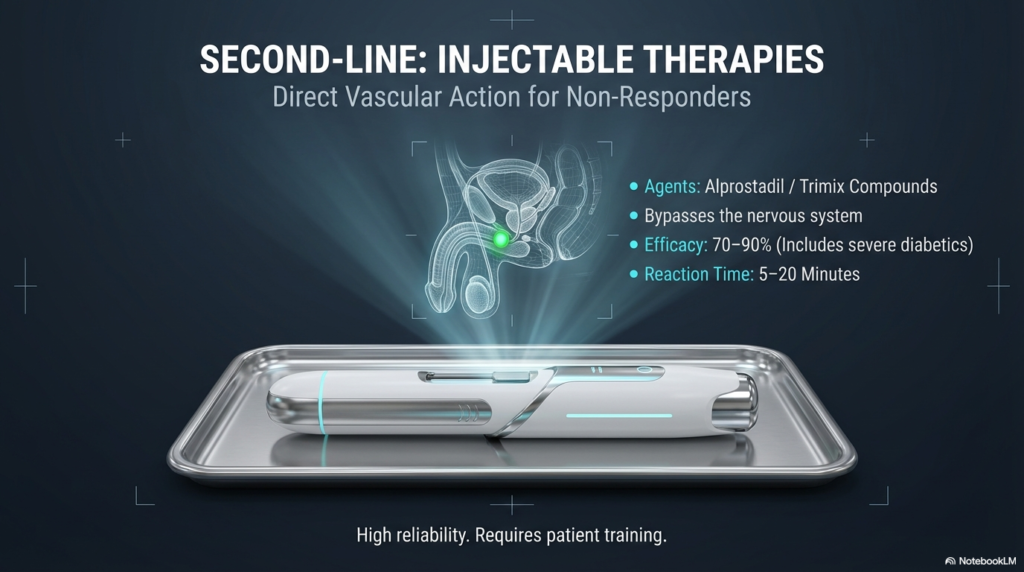
When orals fail, injectables provide direct action, bypassing systemic absorption for 70-90% efficacy.
Types and Mechanisms of Injectable ED Treatments
Alprostadil (prostaglandin E1) relaxes smooth muscles independently of nerves, ideal for post-prostatectomy ED. Trimix (alprostadil + phentolamine + papaverine) customizes dosing, achieving 85% success in severe cases. Erections onset in 5-20 minutes, lasting 30-60 minutes.
Training is crucial: Clinics teach self-injection with fine needles, minimizing discomfort. Success rates surpass orals in diabetics (80% vs. 50%).
Administration, Training, and Patient Experiences
Initial apprehension fades with education—most master technique after 1-2 sessions. Start low, titrate up. Hypothetical: A 60-year-old with nerve damage finds orals ineffective; injectables restore function, boosting confidence.
Variations: Bi-mix (without alprostadil) for sensitivity issues. Compliance is high (70%) once benefits emerge.
Risks, Complications, and Mitigation Strategies
Priapism (1-5%) demands urgent care. Scarring (fibrosis) affects 5-10% with prolonged use; rotation sites help. Bruising is common but transient.
In 2026, refined formulations reduce risks to <2%. Monitoring every 3-6 months catches issues early.
Cost Analysis of Injectable ED Therapies
Monthly costs: $100-400, with vials yielding 10-20 doses at $10-40 each. Initial consults add $200-500. Insurance may cover if orals fail, but out-of-pocket is common. Over 10 years: $12,000-48,000, mid-range versus implants.
Compounding pharmacies offer savings, but verify quality.
Penile Implants: Permanent Solutions for Severe ED
For end-stage ED, implants offer 80-95% satisfaction, mimicking natural function.
Types of Penile Prostheses and Surgical Options
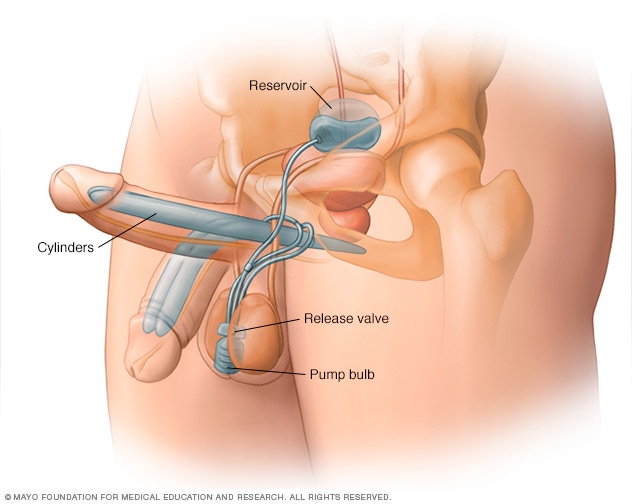
Malleable rods provide simplicity, bendable for use. Inflatable (three-piece) models—cylinders, pump, reservoir—offer natural flaccidity/erection. Three-piece dominate (90% of implants) for superior aesthetics.
2026 advancements: Antimicrobial coatings cut infections to 0.5-1%.
This illustration shows a penile prosthesis in flaccid and erect states, demonstrating the pump mechanism.
Outcomes, Satisfaction, and Long-Term Data
Satisfaction: 85-95% for patients/partners. Mechanical survival: 94% at 7 years, 60% at 15-20 years. Revisions (10-15%) address failures.
Recovery: 4-6 weeks, with full activity by 8 weeks. Complications: Infection (1-3%), erosion (2%).
Irreversibility and Patient Selection Criteria
Implants destroy natural erectile tissue—irreversible. Ideal for non-responders to less invasive options. Counseling ensures informed choice.
Edge cases: Diabetics face higher infection risk (2x), mitigated by glucose control.
Economic Breakdown of Penile Implant Surgery
Upfront: $15,000-25,000, including surgery. Medicare covers if medically necessary; deductibles apply. Long-term: Cost-effective vs. ongoing meds ($30,000-50,000 lifetime).
Medical tourism: 40-60% savings abroad, but risks follow-up issues.
Emerging Therapies: Innovations in ED Treatment for 2026
Beyond classics, 2026 brings regenerative options.
Shockwave therapy: Non-invasive pulses improve blood flow, 80% improvement in mild-moderate ED. Costs: $650-3,500/course.
This illustration depicts shockwave therapy application for ED, showing the device and targeted tissue regeneration.
PRP (P-Shot): Platelet injections regenerate tissue, but evidence mixed—costs $1,000-2,000/session.
Stem cells/gene therapy: Experimental, promising for vascular repair.
Vacuum devices: 70% efficacy, $100-500 one-time.
Comprehensive Cost Comparison Across ED Treatments
Costs vary by type, duration, and location. Here’s a detailed breakdown:
| Treatment Type | Average Efficacy Rate | Initial Cost | Monthly/Ongoing Cost | 10-Year Total Estimate | Insurance Coverage Notes |
|---|---|---|---|---|---|
| Oral PDE5 Inhibitors (e.g., Sildenafil/Tadalafil) | 60-85% | $20-100 (monthly supply) | $20-100 | $2,400-12,000 | Partial for generics; often out-of-pocket |
| Injectable Therapies (e.g., Trimix/Alprostadil) | 70-90% | $200-500 (initial + training) | $100-400 | $12,000-48,000 | Varies; covered if orals fail |
| Penile Implants | 80-95% | $15,000-25,000 | Minimal (revisions ~$5,000 if needed) | $15,000-30,000 | Often covered by Medicare/private insurance |
| Shockwave Therapy | 70-80% (mild cases) | $650-3,500 (course) | N/A | $650-3,500 | Rarely covered; elective |
| PRP Injections | 50-70% (variable) | $1,000-2,000/session | Varies (1-3 sessions) | $3,000-6,000 | Not covered; experimental |
This table highlights value: Implants shine long-term for severe ED. For a visual comparison of oral medication durations (which ties into cost efficiency), see this chart.
Factors: Inflation (3-5%/year), generics save 80%. Bulk buying/online discounts reduce costs 20-50%.
Additional Comparative Table: Efficacy and Side Effects Overview
To further aid decision-making, here’s a table comparing key treatments on efficacy, common side effects, and suitability:
| Treatment | Efficacy Rate | Common Side Effects | Best For | Drawbacks |
|---|---|---|---|---|
| Oral PDE5 (Sildenafil) | 60-70% | Headache, flushing, visual changes | Mild-moderate ED, planned activity | Short duration, food interactions |
| Oral PDE5 (Tadalafil) | 60-70% | Back pain, muscle aches | Spontaneous activity, daily use | Longer side effect duration |
| Injectables (Trimix) | 70-85% | Injection site pain, priapism risk | Severe ED, non-responders to orals | Self-injection learning curve |
| Penile Implants | 80-90% | Surgical risks (infection 1-3%) | End-stage ED | Irreversible, high upfront cost |
| Shockwave Therapy | 70-80% | Mild discomfort during sessions | Mild vascular ED | Multiple sessions, variable long-term data |
This provides a quick reference, considering nuances like patient age and comorbidities.
Legal and Safety Landscape: Risks, Litigation, and Regulations
ED treatments aren’t without legal hurdles.
PDE5 Inhibitors and Melanoma Risk Litigation
Studies link PDE5 use to 1.1-1.6x melanoma risk, via cellular pathways. Litigation claims failure to warn; however, courts dismissed many (e.g., 2020 Pfizer/Eli Lilly win), citing detection bias—users get more screenings.
2026 updates: Meta-analyses show association but not causation; labels may add warnings.
Telehealth Privacy Violations and Class Actions
Telehealth boom spurred lawsuits: GoodRx settled $25M for sharing data with advertisers. Cerebral faced FTC claims for deceptive privacy. HIPAA violations risk fines; patients should review policies.
Counterfeit Medications: Scams and Health Threats
Over 50% online ED drugs are fake, containing contaminants like ink or amphetamines. DEA warns of fentanyl-laced pills from illegal sites. Risks: Ineffective treatment, poisoning. Verify via NABP VIPPS.
For a satirical yet illustrative take on litigation in healthcare (analogous to ED drug cases), this cartoon depicts judicial oversight in drug-related crises.

Mental Health Benefits: Beyond Physical Restoration
Treating ED yields profound psychological gains.
Psychological Improvements from Effective ED Therapy
Successful treatment reduces depression (up to 50% symptom drop), anxiety, and boosts self-esteem. Men report enhanced confidence, interrupting negative cycles.
Relationship and Communication Enhancements
Couples therapy integration improves intimacy; 70% note stronger bonds post-treatment.
Integrated Care: Combining Therapy with Medical Interventions
CBT + PDE5 yields 69% remission in psychogenic ED. Screen for comorbidities; holistic models optimize outcomes.
Making Informed Decisions: Personalized ED Treatment Strategies
Tailor based on severity, health, preferences. Shared decision-making: Discuss pros/cons with providers.
Monitoring: Adjust as needed; annual check-ins.
Conclusion: Empowering Your Journey Through ED Management
In 2026, ED treatment offers hope with high-efficacy options, but demands vigilance on costs, legality, and mental health. Consult specialists, verify sources, and prioritize comprehensive care for optimal results.