The 2026 USDA guidelines propose a radical inversion of the nutritional hierarchy, prioritizing protein and animal fats while de-emphasizing grains. This structural “reset” creates immediate contradictions regarding saturated fat limits and potential fiber deficits. This analysis compares the mechanistic validity of the new USDA model against the established, outcome-driven Mediterranean protocol.
1. Definition and Policy Context
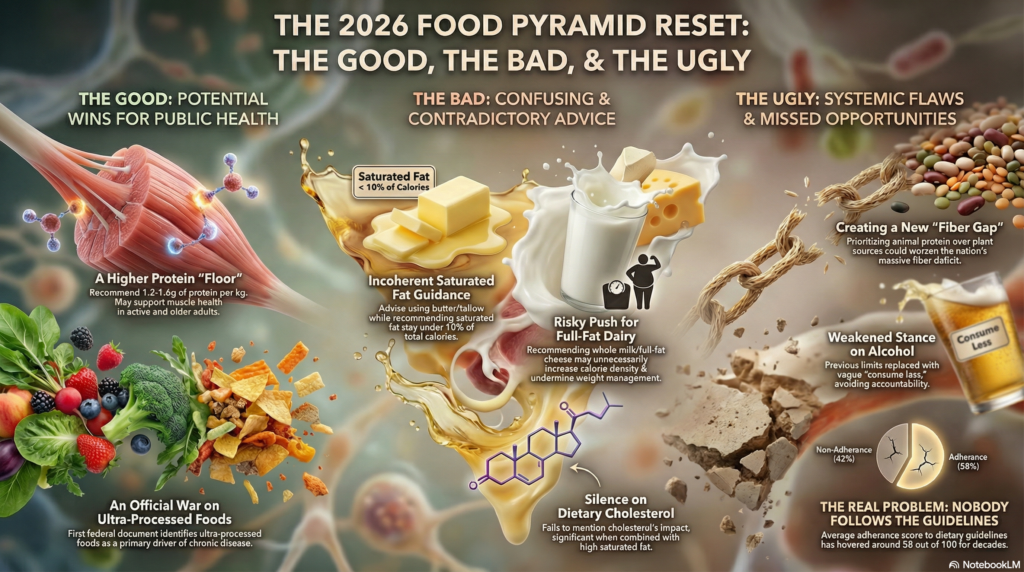
The 2026 USDA Guidelines (“The Reset”) represent a shift from grain-based caloric adequacy to protein-centric satiety. The model establishes a “protein floor” (1.2–1.6g/kg), explicitly condemns ultra-processed foods (UPFs), yet paradoxically promotes high-fat dairy and tallow.
The Mediterranean Diet serves as the control variable in this analysis. It is a plant-based, lipid-rich pattern characterized by high fiber intake, monounsaturated fats (EVOO), and minimal processing. Unlike the theoretical nature of the 2026 Reset, the Mediterranean model is validated by three decades of prospective cohort data regarding cardiovascular risk reduction.
2. Mechanistic Analysis: The Substitution Trap
The critical failure mode of the 2026 guidelines is the “Substitution Trap.” By elevating animal protein without correcting the food environment, the policy risks displacing fiber sources.
Mechanism of Action: The Fiber Deficit Risk
Trigger: Increased Animal Protein Focus
Mechanism: Caloric Displacement
Outcome: Fiber Deficit (< 15g/day)
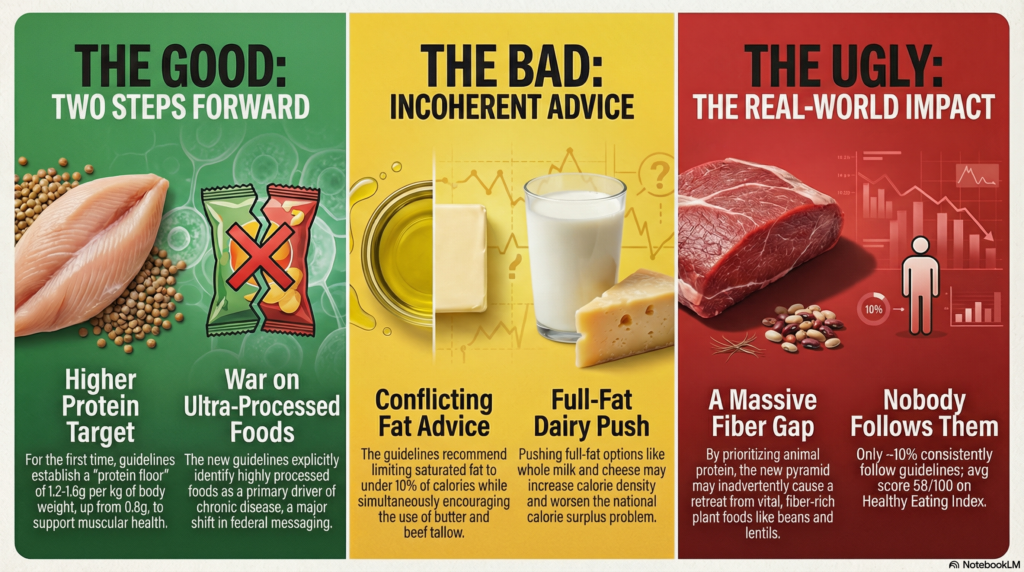
The biological conflict arises in lipidology. The guidelines cap saturated fat at 10% but encourage vehicles for saturated fat (butter, beef). This creates a cognitive dissonance that clinical experience suggests will resolve in favor of palatability—leading to excess intake.
3. Chronological Evolution of Guidelines
4. Comparative Clinical Data
| Parameter | 2026 USDA Guidelines | Mediterranean Diet |
|---|---|---|
| Core Foundation | Animal Protein (1.2-1.6 g/kg) | Plant-Based + Olive Oil |
| Primary Lipid Source | Mixed/Contradictory Tallow, Dairy vs. 10% Cap |
Monounsaturated EVOO, Nuts |
| Fiber Status | Deficit Risk Displaced by protein |
Optimal Inherent in legume base |
| Cost/Accessibility | Low Accessibility (High meat cost) | High Accessibility (Legumes/Grains) |
| Evidence Level | Theoretical / Policy-Driven | Level 1 Evidence (RCTs) |
5. The Dr. Belh Framework: Applied Nutrition
Given the contradictions in the federal guidance, clinical application requires a hybrid approach. We apply the Environmental Intervention Protocol.
1. Observation
Adherence to guidelines is historically low (HEI score ~58/100). Complexity reduces compliance.
2. Context
The “Protein Floor” is beneficial for sarcopenia prevention but financially regressive for low-income patients.
3. Solution
Carb:Fiber Ratio. Instead of banning grains, enforce a 10:1 ratio. Prioritize environmental modification over willpower.
6. Clinical Extraction Points
- Protein Thresholds: The new 1.2g/kg floor is physiologically sound for muscle maintenance but operationally difficult without supplementation or high costs.
- UPF Recognition: The explicit designation of Ultra-Processed Foods as a primary vector of disease is the guideline’s strongest asset.
- Lipid Management: Patients following 2026 guidelines require closer monitoring of ApoB/LDL due to the “saturated fat paradox.”
- Adherence: The Mediterranean Diet remains superior for long-term adherence due to flexibility and lower cost barriers.
Image Generation Prompt
7. Frequently Asked Questions
Is the 2026 protein recommendation safe for kidneys?
For patients with normal renal function, 1.6g/kg is safe. Patients with CKD Stages 3-5 require nephrology consultation before increasing intake.
Why does the USDA promote tallow if saturated fat is limited?
This is a systemic contradiction driven by agricultural lobbying rather than clinical consensus. Disregard tallow; prioritize PUFA/MUFA.
Can I follow the new guidelines on a budget?
It is difficult. The reliance on animal protein raises costs significantly compared to the legume/grain-based Mediterranean model.
What is the “Carb-to-Fiber” ratio mentioned?
A tool to assess carbohydrate quality. For every 10g of carbohydrate, there should be at least 1g of fiber (10:1 ratio).
Does the Mediterranean Diet support muscle growth?
Yes, provided total protein intake reaches the 1.2g/kg threshold, which can be achieved through fish, legumes, and greek yogurt.
Ref :
https://pmc.ncbi.nlm.nih.gov/articles/PMC8123460/
https://pmc.ncbi.nlm.nih.gov/articles/PMC6770822/