Ketogenic Diet Induced Insomnia
The ketogenic diet is a validated metabolic intervention for glycemic control, yet a significant patient subset reports severe circadian disruption known as “keto-insomnia.” This adverse event typically indicates an autonomic nervous system incompatibility or an acute electrolyte imbalance. The following analysis dissects these physiological mismatches and outlines corrective protocols based on the clinical methodology of Frank Suárez.
Clinical Definition: Keto-Adaptation Insomnia
Keto-Adaptation Insomnia is defined as the inability to maintain sleep continuity, specifically characterized by nocturnal awakenings (typically around 3:00 AM) following the induction of a high-fat, low-carbohydrate nutritional protocol. Unlike psychogenic insomnia, this condition is metabolic in origin, driven by cortisol elevation and mineral deficiency inherent to rapid glycogen depletion and increased fatty acid oxidation.
Mechanistic Analysis
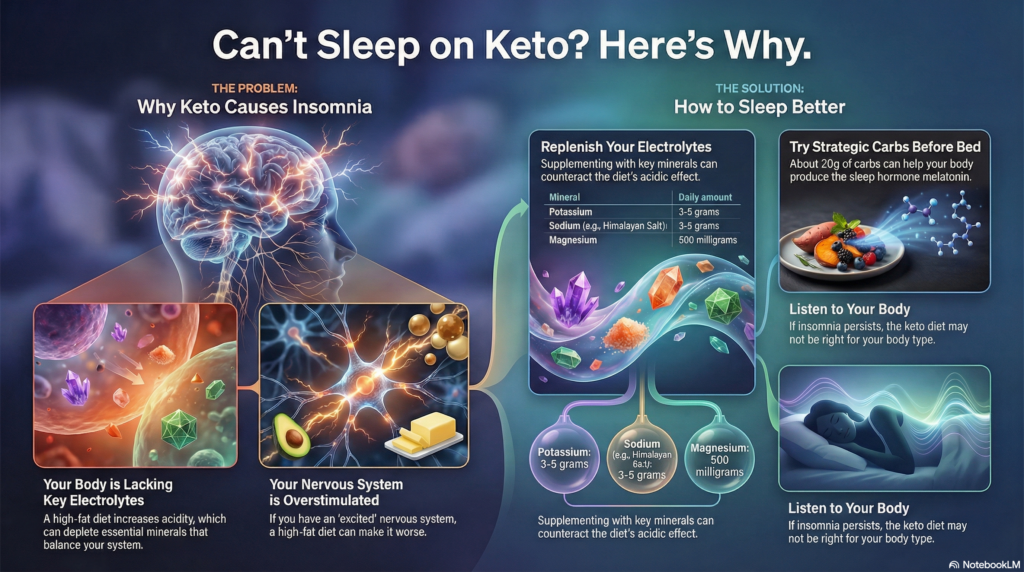
The transition to ketosis increases systemic acidity and demands specific autonomic responses. In incompatible nervous systems, this triggers a sympathetic crisis.
Pathology of Keto-Insomnia
Applied Methodology (Dr. Belh Framework)
We apply a tripartite approach to diagnose and resolve metabolic insomnia: Observation of the typology, Contextualization of the mineral environment, and Strategic Solutioning.
1. Observation: Nervous System Typology
The “Excited” System Variance: Not all metabolic profiles tolerate high lipid loads. Individuals with an “Excited” (Sympathetic dominant) nervous system possess a low tolerance for dietary fats. The ingestion of high quantities of lipids acts as a stimulant rather than a fuel source, forcing the body into a “fight or flight” state that physically inhibits the onset of sleep.
2. Context: The Mineral Buffering Deficit
The Acidity-Mineral Axis: Fatty acids increase the body’s pH load. To maintain homeostasis, the body utilizes alkaline minerals (Potassium, Magnesium, Sodium). If dietary intake does not match the increased demand caused by ketosis, the cellular electrical system malfunctions. The result is an inability to relax musculature and nervous impulses required for sleep.
3. Solution: Tryptophan Transport Protocol
Strategic Carbohydrate Timing: Melatonin production requires specific amino acid precursors. On a strict keto diet, amino acid transport pathways can become saturated. The consumption of a small, specific carbohydrate dose (approx. 20g) one hour prior to sleep clears these pathways, allowing precursors to cross the blood-brain barrier and facilitate melatonin synthesis.
Projected Recovery Timeline
Extraction Zone: Key Clinical Protocols
- ✓
Potassium Requirement: Supplement 3 to 5 grams daily to neutralize acidity.
- ✓
Sodium Source: Use unprocessed salts (Himalayan/Celtic) at 3-5 grams daily.
- ✓
Magnesium Cofactor: Essential 500mg daily intake to enable the Sodium-Potassium pump.
- ✓
The “Carb Trick”: In refractory cases, consume 20g of carbohydrates (e.g., oats) 60 minutes before bed.
Comparative Synthesis: Nervous System Tolerances
| Parameter | Passive System | Excited System |
|---|---|---|
| Fat Tolerance | High / Excellent | Low / Stressful |
| Sleep Disruption Risk | Minimal | Severe (Acute Insomnia) |
| Corrective Action | Standard Protocol | Electrolytes + Carb Timing |
AI Visual Generation Prompt
Clinical FAQ
Does the “carb trick” kick me out of ketosis?
Typically, no. 20g of slow-digesting carbohydrates (like oats) consumed post-activity or pre-sleep is generally utilized for immediate metabolic needs or glycogen replenishment without disrupting the overall ketosis state.
Why do electrolytes matter for sleep?
Magnesium is a natural relaxant. Potassium balances cellular fluid. Without them, the neuromuscular system remains in a state of hyper-excitability, preventing deep sleep cycles.
How do I know if I have an “Excited” nervous system?
Indicators include: light sleep, sensitivity to late-night meals, difficulty digesting fats, and a tendency to be easily startled or stressed.
Is salt dangerous for my blood pressure?
On a ketogenic diet, insulin levels drop, causing the kidneys to excrete sodium. Unlike a high-carb diet, salt restriction on keto can be dangerous. Always consult your cardiologist.
What if supplements don’t work?
If electrolyte correction and carb timing fail, the high-fat protocol may be fundamentally incompatible with your current physiological state. A lower-fat, moderate-carb approach should be considered.