Introduction: Epidemiological data has long established the Mediterranean Diet (MD) as a benchmark for cardiovascular health, yet its role in oncology requires distinct scrutiny. The correlation between this nutritional pattern and reduced cancer incidence is increasingly supported by mechanistic evidence, specifically regarding inflammation and oxidative stress. This analysis deconstructs the biochemical pathways and clinical realities of the MD in the context of cancer prevention and survivorship.
1. Definition and Nutritional Parameters
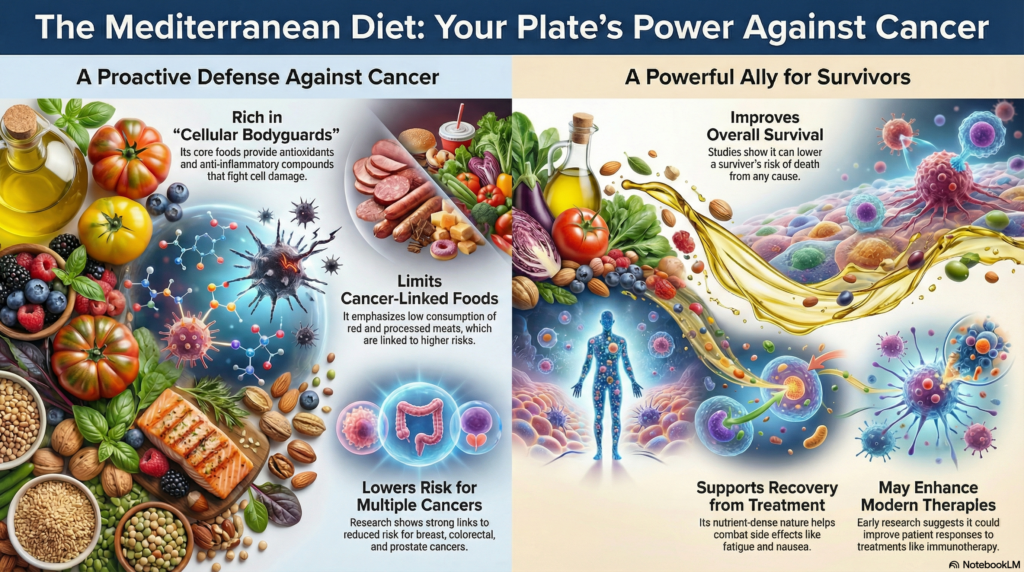
The Mediterranean Diet is not a restrictive regimen but a nutritional phenotype characterized by specific lipid profiles and phytochemical density. Clinically, it is defined by a high ratio of monounsaturated to saturated fats, primarily derived from extra-virgin olive oil (EVOO). It prioritizes unrefined plant matrices—vegetables, fruits, legumes, nuts, and cereals—providing a constant supply of antioxidants and dietary fiber. Unlike Western dietary patterns, it limits red meat and processed foods, thereby reducing exposure to heme iron and nitrosamines, known carcinogenic drivers.
2. Mechanistic Analysis: The Cellular Cascade
To understand efficacy, we must map the biological trajectory of the diet’s components. The MD operates through synergistic pathways rather than isolated nutrient effects.
Biochemical Pathway of Protection
High Polyphenols + Omega-3 + Fiber
Reduced Insulin Resistance & Gut Microbiome Dysbiosis
Inhibition of Pro-inflammatory Cytokines (IL-6, TNF-α) & DNA Repair Support
The mechanism relies on “cellular bodyguards.” Polyphenols scavenge reactive oxygen species (ROS), preventing DNA mutations. Simultaneously, fiber intake modulates the gut microbiome, producing short-chain fatty acids (SCFAs) like butyrate, which exhibit anti-neoplastic properties specifically in the colon.
3. The Dr. Belh Framework: Clinical Application
Translating epidemiology into patient care requires adherence to three core principles derived from recent oncological data.
1. The Synergy Principle
Observation: Isolated supplements (e.g., Vitamin E capsules) often fail in trials.
Clinical Rule: Efficacy depends on the food matrix. The interaction between lipids in olive oil and carotenoids in vegetables enhances bioavailability. Prescribe whole foods, not extracts.
2. The Survivorship Context
Observation: Cancer survivors face high risk of cardiovascular co-morbidities.
Clinical Rule: The MD is critical post-diagnosis not solely for recurrence prevention (where data is evolving), but to mitigate cardiotoxicity from chemotherapy and improve overall mortality rates.
3. The Ethanol Caveat
Observation: Red wine is traditionally part of the MD but alcohol is a Class 1 carcinogen.
Clinical Rule: For cancer prevention, the risk of ethanol outweighs the benefit of resveratrol. Recommending alcohol abstinence or severe restriction is the oncologically safer protocol.
4. Physiological Impact Timeline
Adherence to the Mediterranean protocol yields results in a predictable chronological order. This timeline assists in managing patient expectations regarding physiological changes.
Baseline
High inflammatory markers
Weeks 4-6
Reduction in C-reactive protein (CRP)
Months 6+
Microbiome diversification
Years
Statistically significant risk reduction
5. Extraction Zone: Key Clinical Takeaways
- Holism over Isolation: The protective effect against cancer stems from the aggregate of nutrients, not single “superfoods.”
- Processed Meat Reduction: The MD naturally eliminates Group 1 carcinogens found in processed meats, a major factor in colorectal cancer prevention.
- Adjuvant Support: For patients undergoing immunotherapy, a fiber-rich MD may enhance treatment efficacy by optimizing the gut microbiome.
- Causation Complexity: While correlation is strong, proving direct causation remains challenging due to lifestyle confounders (e.g., social activity, lower stress).
6. Comparative Analysis: Western vs. Mediterranean
| Dietary Factor | Western Pattern | Mediterranean Pattern |
|---|---|---|
| Lipid Source | Saturated / Trans Fats PRO-INFLAMMATORY |
Monounsaturated (EVOO) ANTI-INFLAMMATORY |
| Fiber Intake | Low (< 15g/day) | High (> 30g/day) |
| Red/Processed Meat | Staple / Daily HIGH CANCER RISK |
Rare / Monthly PROTECTIVE |
| Glycemic Load | High (Insulin Spikes) | Low/Moderate (Stable) |
7. Image Generation Protocol
8. Frequently Asked Questions
Does the Mediterranean Diet cure cancer?
No dietary pattern cures cancer. The MD is a preventive strategy to lower risk and a supportive therapy during treatment to manage side effects and comorbidities.
Is olive oil safe to cook with at high temperatures?
Yes. Quality extra virgin olive oil has a high smoke point (approx. 200°C/400°F) and its polyphenol content protects the fats from oxidation during cooking.
How does sugar intake relate to this diet and cancer?
The MD naturally minimizes added sugars. High sugar intake drives insulin resistance and inflammation, which are established drivers of carcinogenesis.
Can I follow this diet if I am vegetarian?
Yes. The MD is primarily plant-based. Fish and poultry can be omitted, provided adequate plant protein (legumes, nuts, seeds) is consumed.
What is the most critical component to change first?
Eliminating processed meats and replacing saturated fats (butter) with unsaturated fats (olive oil) yields the highest immediate reduction in inflammatory markers.
Ref: