Technical Brief
The Leader’s Guide to Mastering
High-Stakes Interactions
Neutralize emotional dysregulation and restore collaboration using a clinical methodology based on dialectical behavioral principles.
The Dynamics of Emotional Dysregulation
Interactional failure is not a character flaw, but a predictable biological response. When stress saturates the system, the amygdala short-circuits the prefrontal cortex.
Biometric Stage Analysis
1. Calm State
Baseline functioning
2. Trigger
Threat detected
3. THE HIJACK
Peak Dysregulation
4. Recovery
Post-interaction
Visual representation of the inverse relationship between limbic activation and prefrontal cortex function.
Anatomy of Failure: The Downward Spiral
Understanding the invariable causal sequence of conversational collapse is the first step to interrupting it. Click each step to analyze the mechanism.
Trigger
Threat perception
Hijack
Cognitive block
Reaction
Defense or Withdrawal
Contagion
Self-perpetuating loop
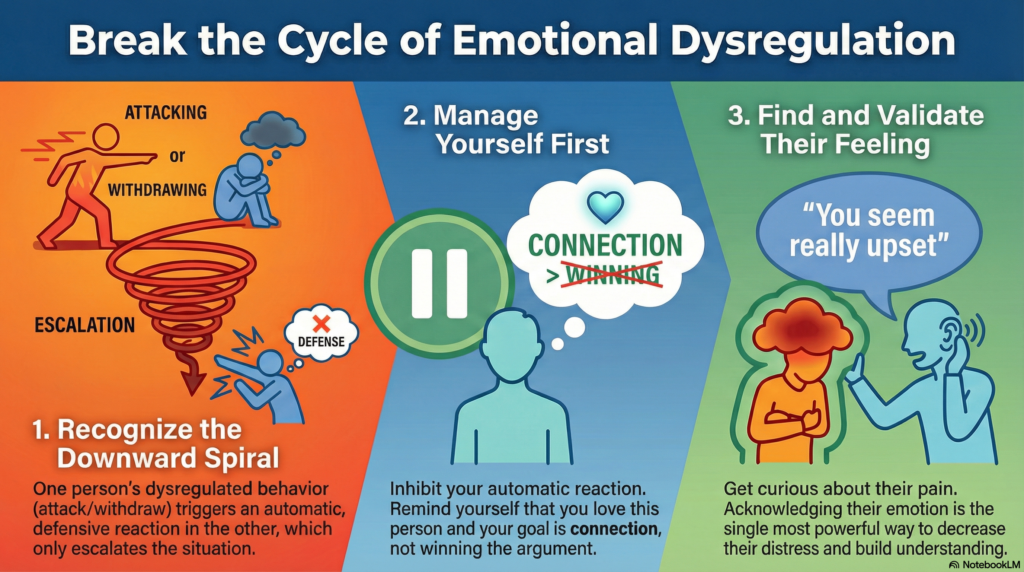
Intervention Methodology
To reverse the spiral, the leader applies a strict three-phase protocol, replacing automatisms with clinical intentionality.
Inhibiting Reflexes
Self-regulation precedes interaction. The leader must stabilize their own limbic system before attempting any communication.
The Description Technique
Replace moral judgment with factual description to reactivate the prefrontal cortex.
Did you know?
Description activates different brain areas than judgment, allowing logic to return.
Comparative Impact
| Phase | Automatic Reaction | Intentional Response |
|---|---|---|
| Perception | Judgment (“Incompetent”) | Description (“Deadline missed”) |
| Cognition | Tunnel vision, negative memory | Complex thought, shared goals |
| Communication | Attack or Withdrawal | Validation of feelings |
| Result | Relationship rupture | Return to rationality |
Relational Effectiveness Scores
Decision Quality
Relationship Preservation
The Upward Spiral
Primary Emotion
Observable Facts
Tension Reduction
Collaboration
Frequently Asked Questions